01 / Case Study · ~5 min read
Alexa+
UX vision definition for Amazon's next-generation AI assistant. Foundational interaction model and conversational tone, defined before a single screen got designed.

The Challenge
Alexa needed a fundamental redefinition. Not a feature upgrade, a generation shift. What should Alexa be now that LLMs make conversation viable as a primary interaction model? How should it speak? What should it offer? How should the experience feel different from the decade of voice assistants that came before?
The work had to happen at the conceptual layer before any screen design started. Amazon invented the in-home assistant, then let it coast. The opportunity was enormous and unclaimed.

Approach
It started in a room, not a screen. I facilitated a three-day cross-functional workshop: PMs, engineers, writers, designers, all in one place, defining what the next generation of Alexa should be and, more importantly, should not. Large and small group exercises generated wide-open ideas, then filtered them against two tests: what customers wanted and what the technology honestly enabled.
The output became the program’s foundation, and one principle above all: every decision built trust, through consistency and speed.
From there I led the UX design team, with visual design partners from a sister team, through end-to-end concepting and refinement, and a working session with Amazon’s Futures team brought longer-arc speculative thinking into the work.
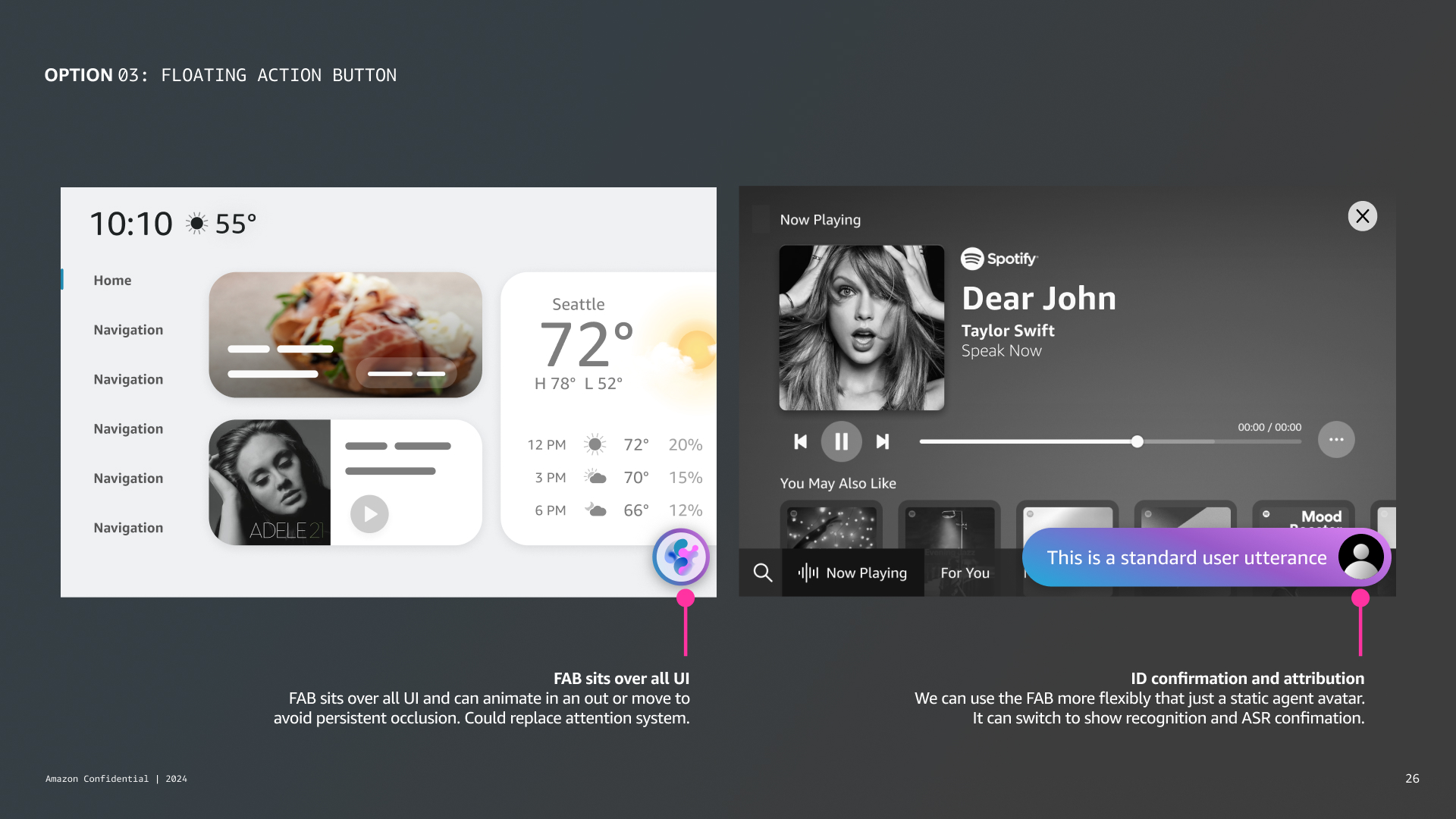
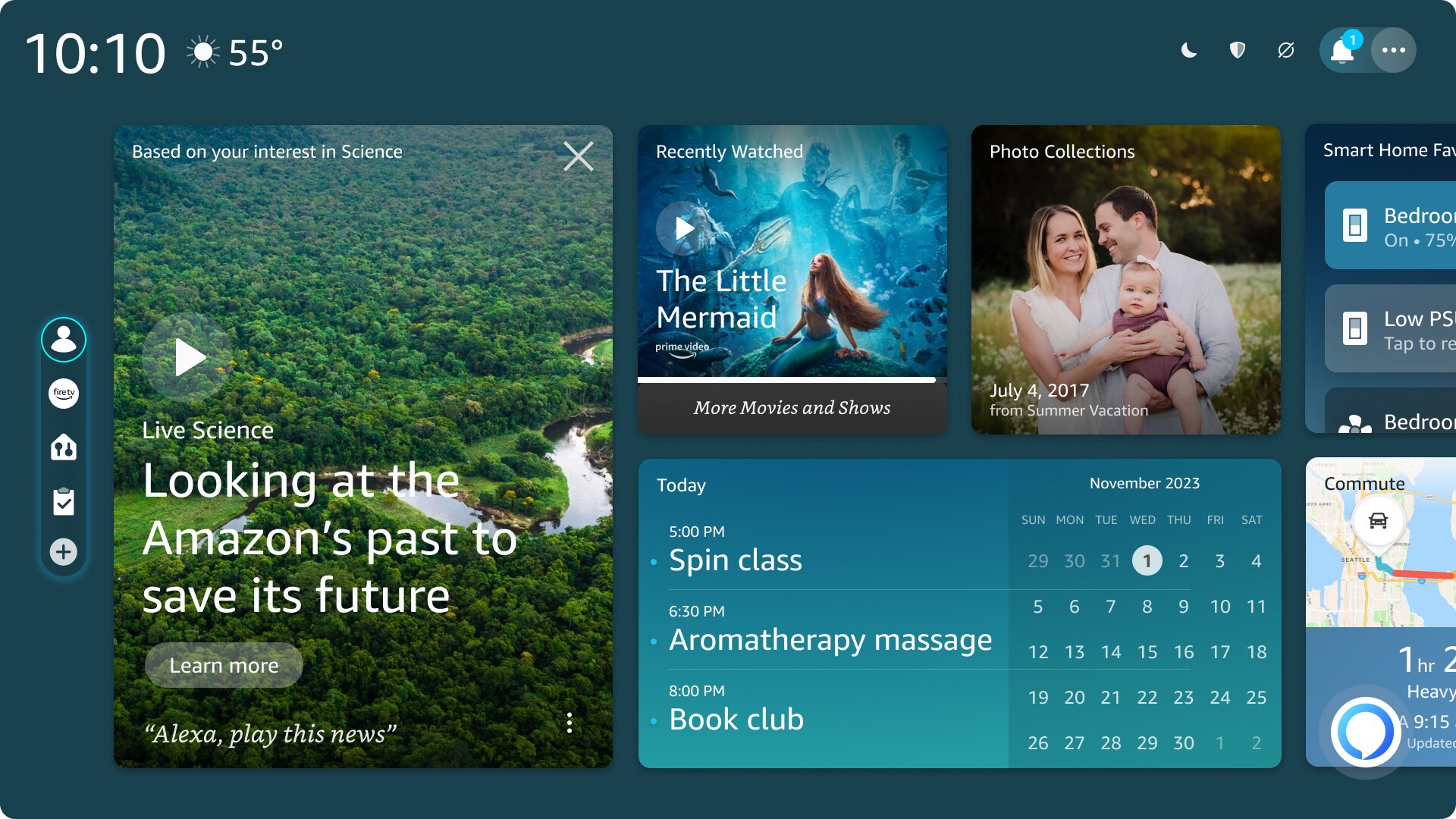
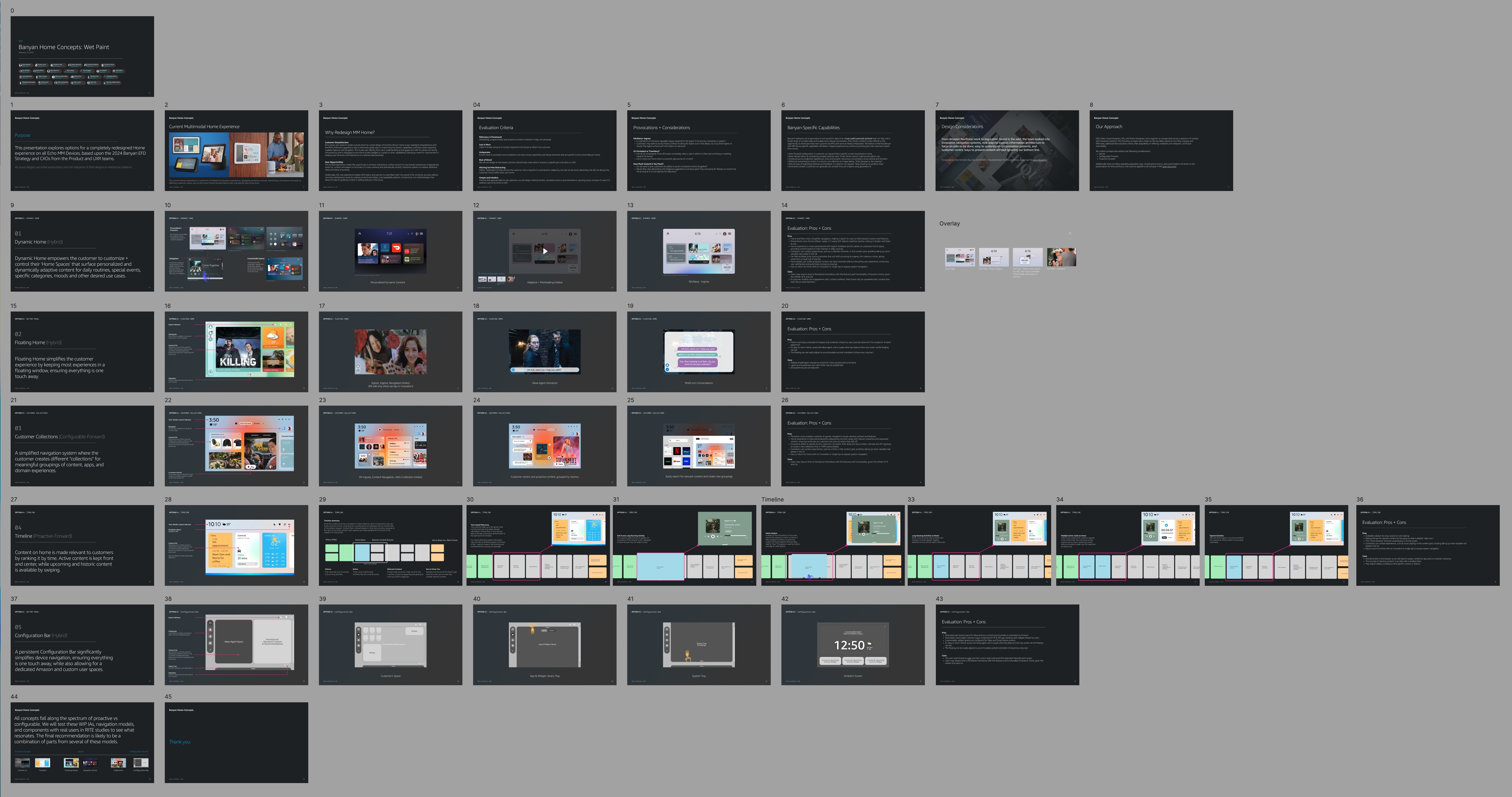
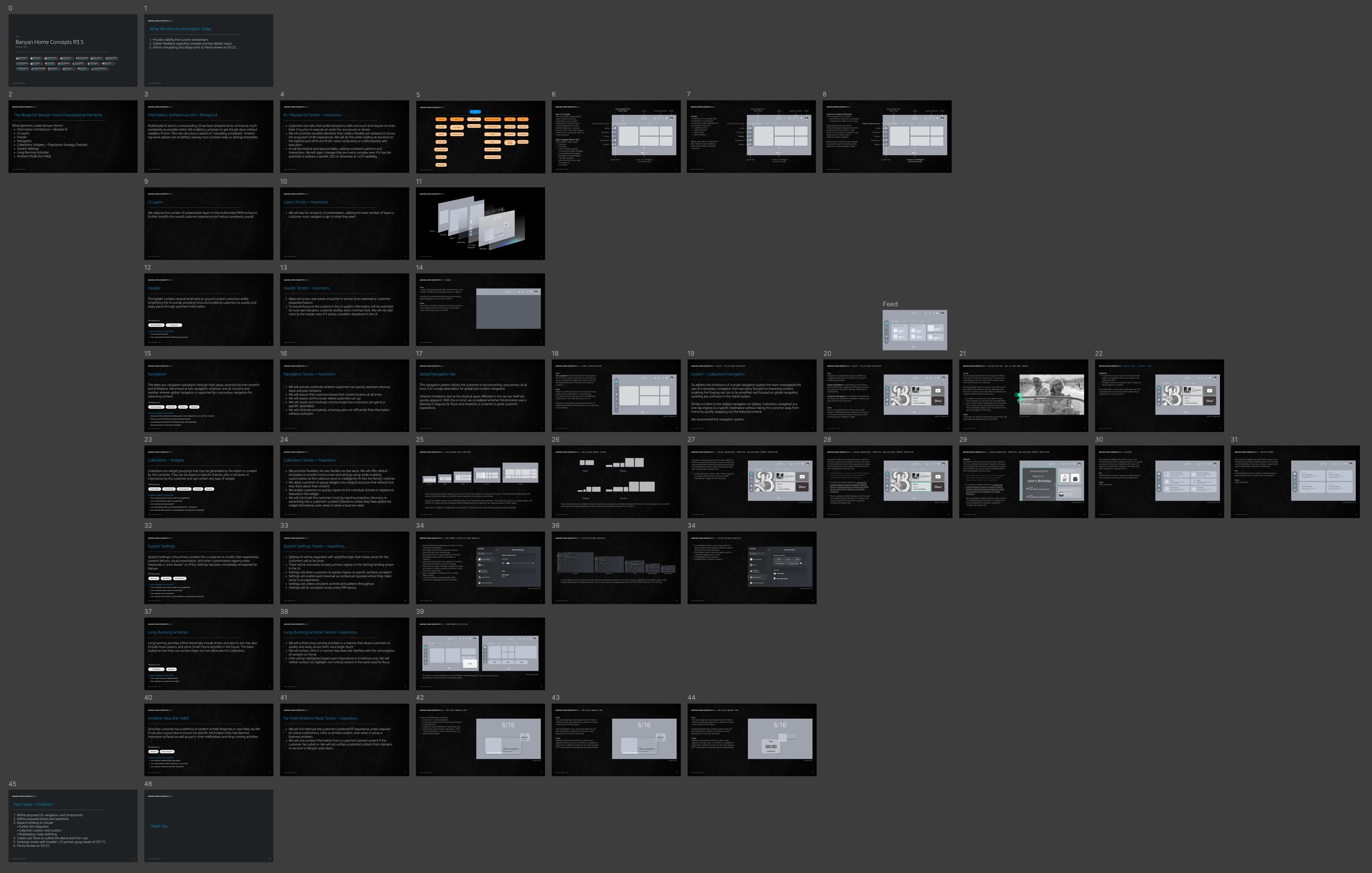
The Work
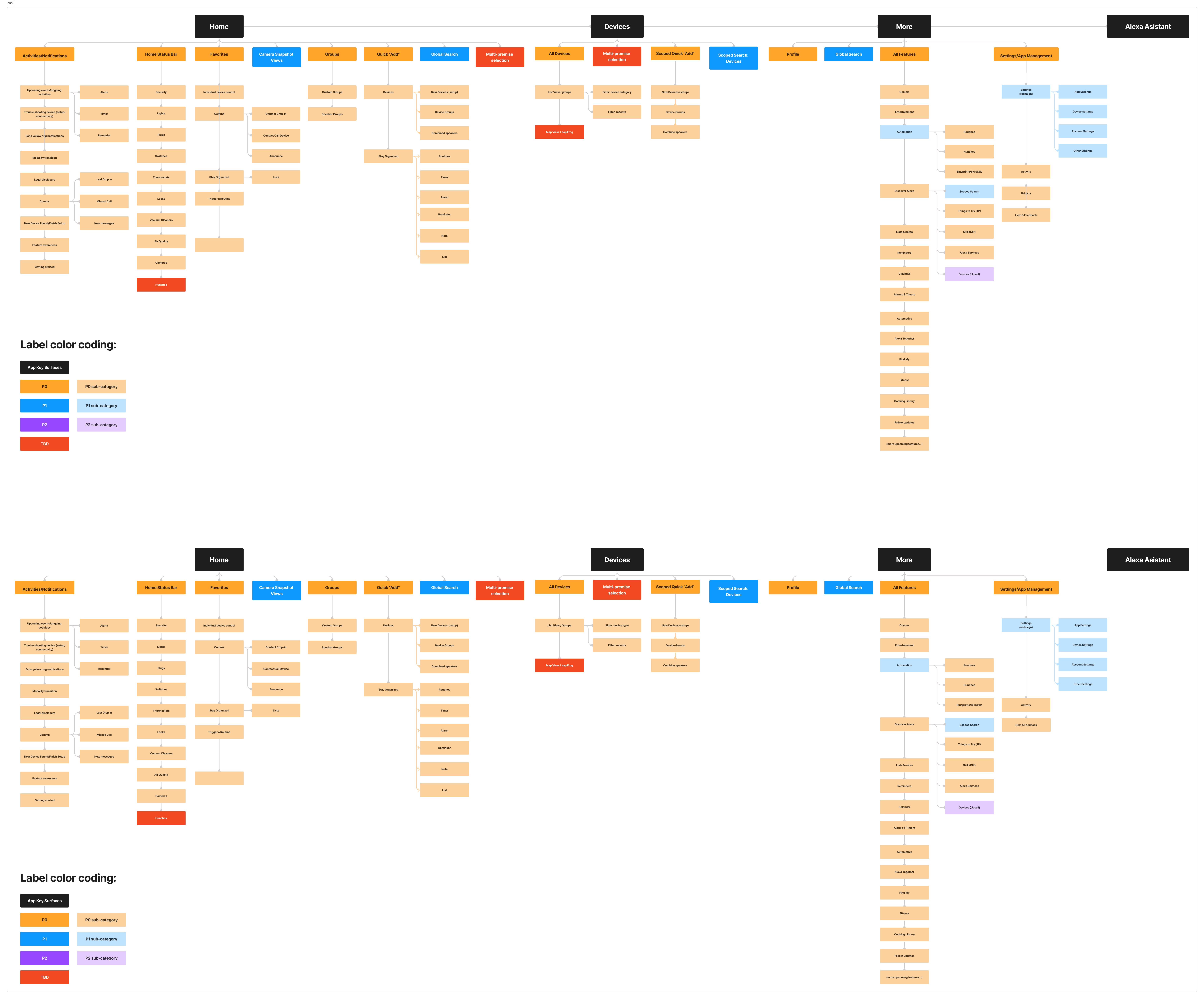
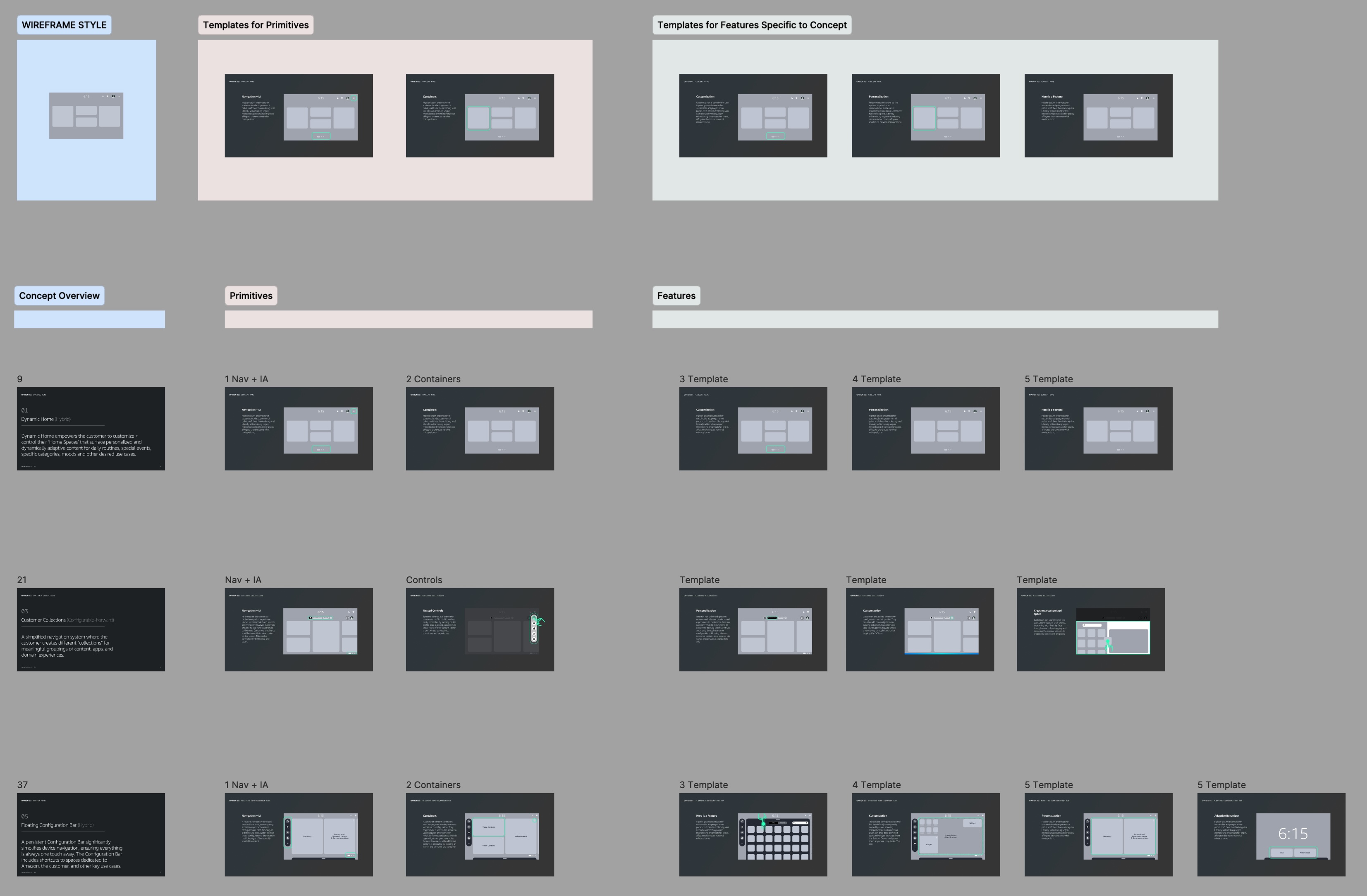
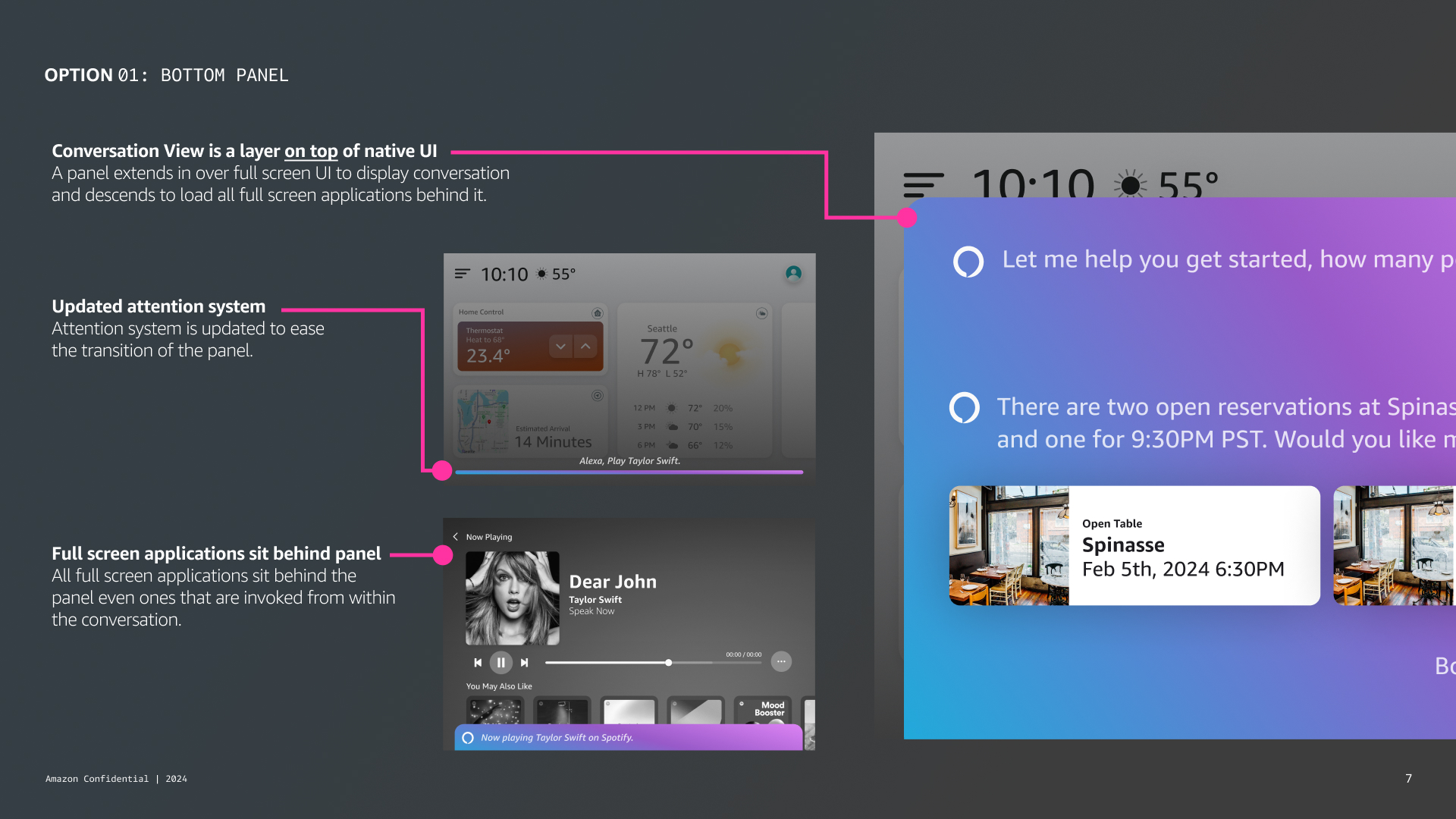
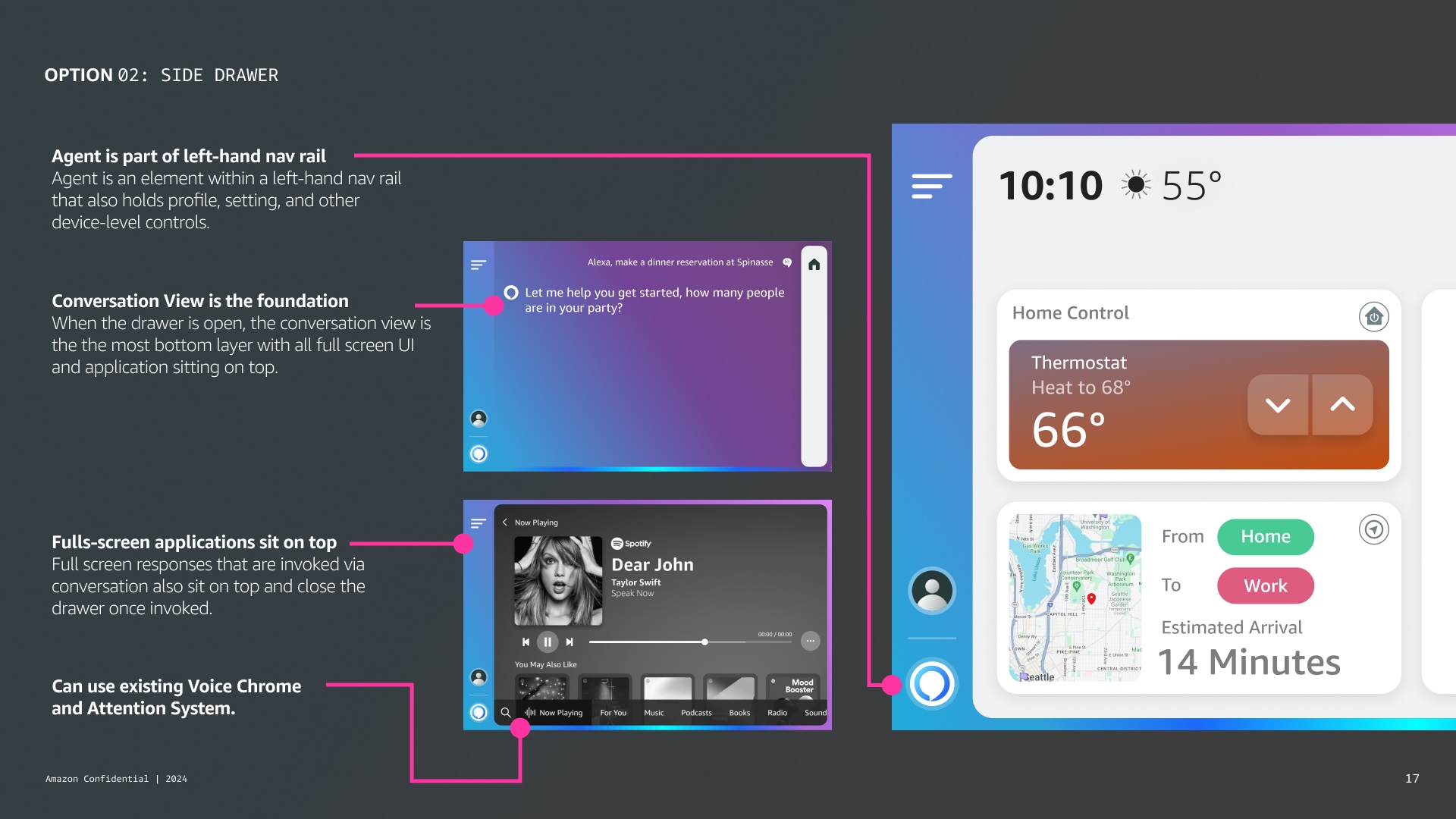
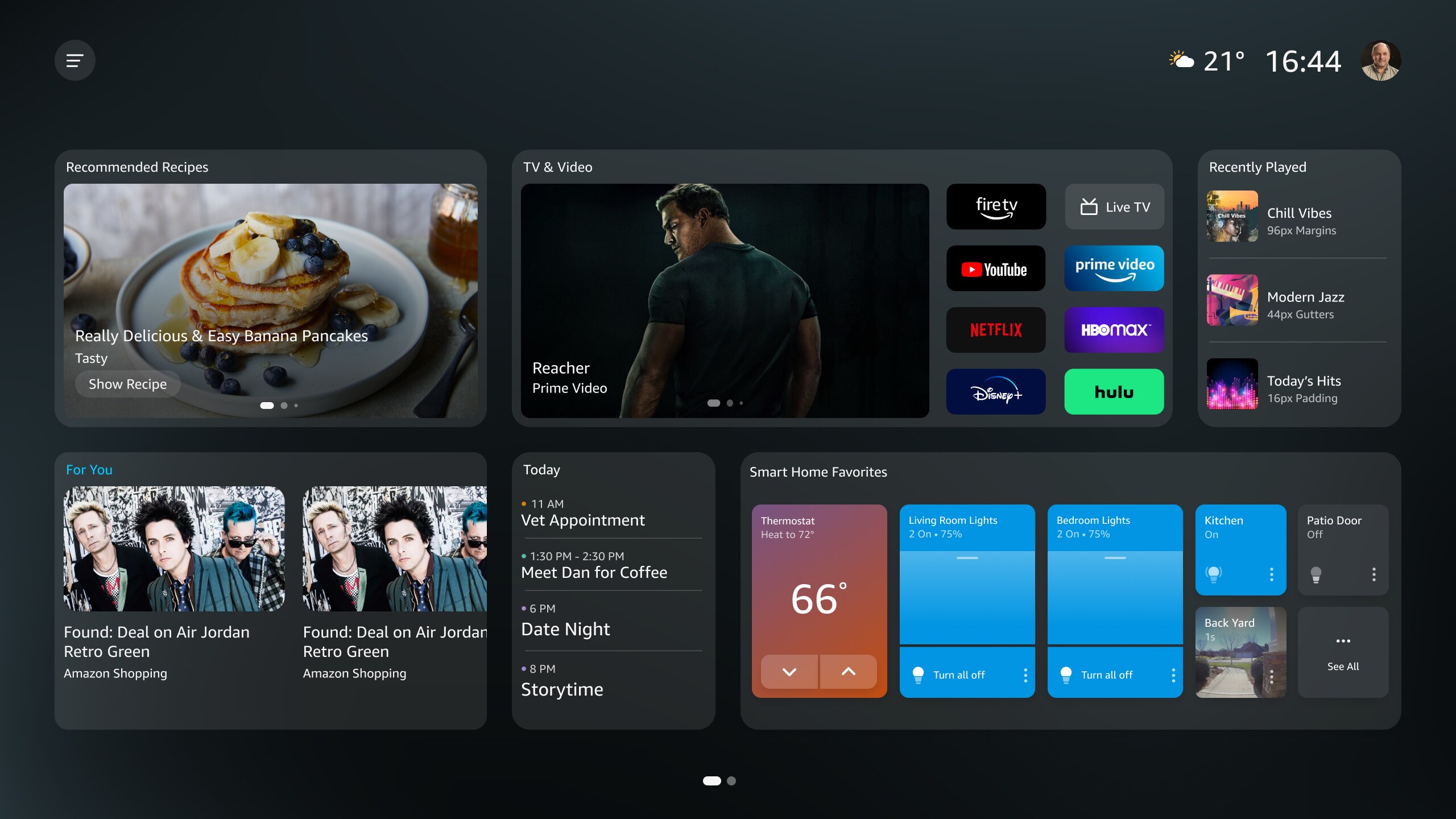
The vision-definition phase produced an interaction model document, conversational tone guidelines and a service architecture map. They became the reference for every team building toward Alexa+. Weekly executive review for the duration of the project drove alignment through multiple rounds of sign-off up to and including SVP Panos Panay.
Working with UXR, we ran the system through its paces with customers, locking design, animation and LLM specifications with our engineering partners. The experience had to hold across every device class: fullscreen, minimal visual cues and audio-only.
The hardest design problem wasn’t the words or the screens. It was getting hundreds of people across multiple orgs to agree on what they were building, and to keep agreeing all the way to ship.
The Payoff
Before: a beloved device family running at a loss. An assistant used for timers and weather, with its best features undiscovered.
After: Alexa+ shipped as the centerpiece of Amazon’s generative AI strategy. Included with Prime at 200M+ member reach, a standalone subscription for everyone else, and commerce surfaces woven into the Home.
From subsidized hardware to subscription-worthy: the assistant now pays its way.
Reflections
Vision work is leadership work. The deliverable that mattered most wasn’t a Figma file. It was the alignment artifact that let three orgs commit to the same direction in the same week. Senior product design at this scope becomes facilitation more than authorship. Both have to be excellent for the work to ship.
Credits
Role. UX Design Manager and hands-on designer. Facilitated the founding strategy workshop, defined the interaction model and design principles, led the design team through concepting and executive review, and carried the work from first sketch to ship.
Team. The UX design team plus visual design partners from a sister team, with a working session alongside Amazon’s Futures team.
Public. Alexa+ launched in 2025, included with Prime. Amazon described it as feeling less like interacting with technology and more like engaging with an insightful friend.