02 / Case Study · ~4 min read
AWS IoT TwinMaker
A zero-to-one industrial AR service. I was the only UX/UI designer from initial concept, translating IoT data into a single 3D spatial interface.

The Challenge
Most software pretends industrial data is clean. It isn’t. Facility managers work across decades of disconnected systems. Sensors and PLCs on the OT side. CAD models, maintenance systems, and work orders on the IT side. When something fails, the diagnostic loop spans multiple specialists and a lot of downtime.
AWS wanted to ship an industrial AR service that collapsed all of it into one 3D spatial interface. Usable by facility managers and field technicians without specialized training.
Approach
About ten months working alone as the UX/UI designer on TwinMaker. I partnered with engineering and product leadership at AWS IoT to turn fragmented multi-source data into a unified spatial experience.
The core insight came early. Real-time industrial data only feels useful when you anchor it to where it lives. Tie a sensor reading to a physical location in a 3D model and the data stops being abstract. Facility managers can spot failures, dispatch crews, and guide AR repairs without ever leaving the interface.
The Work
A digital twin is a live digital representation of a physical system, fed in real time by sensors, cameras and enterprise data. The model mirrors structure, state and behavior as they happen.
AWS IoT TwinMaker turns those streams into a single visual model of any factory, building, plant or mechanical asset. One interface to monitor, diagnose, correct and optimize.
The project needed new interaction patterns. IoT dashboards treat data as rows. 3D tools treat space as a viewport. TwinMaker had to do both at once. Every sensor became a placeable object. Every alarm a spatial event. Every repair a navigable path.
Three decisions mattered. Data anchored to the spatial model, never floating in side panels. Alerts became physical phenomena living in space, not notifications in a feed. AR guidance flowed continuously with the desktop interface, not a separate mode.
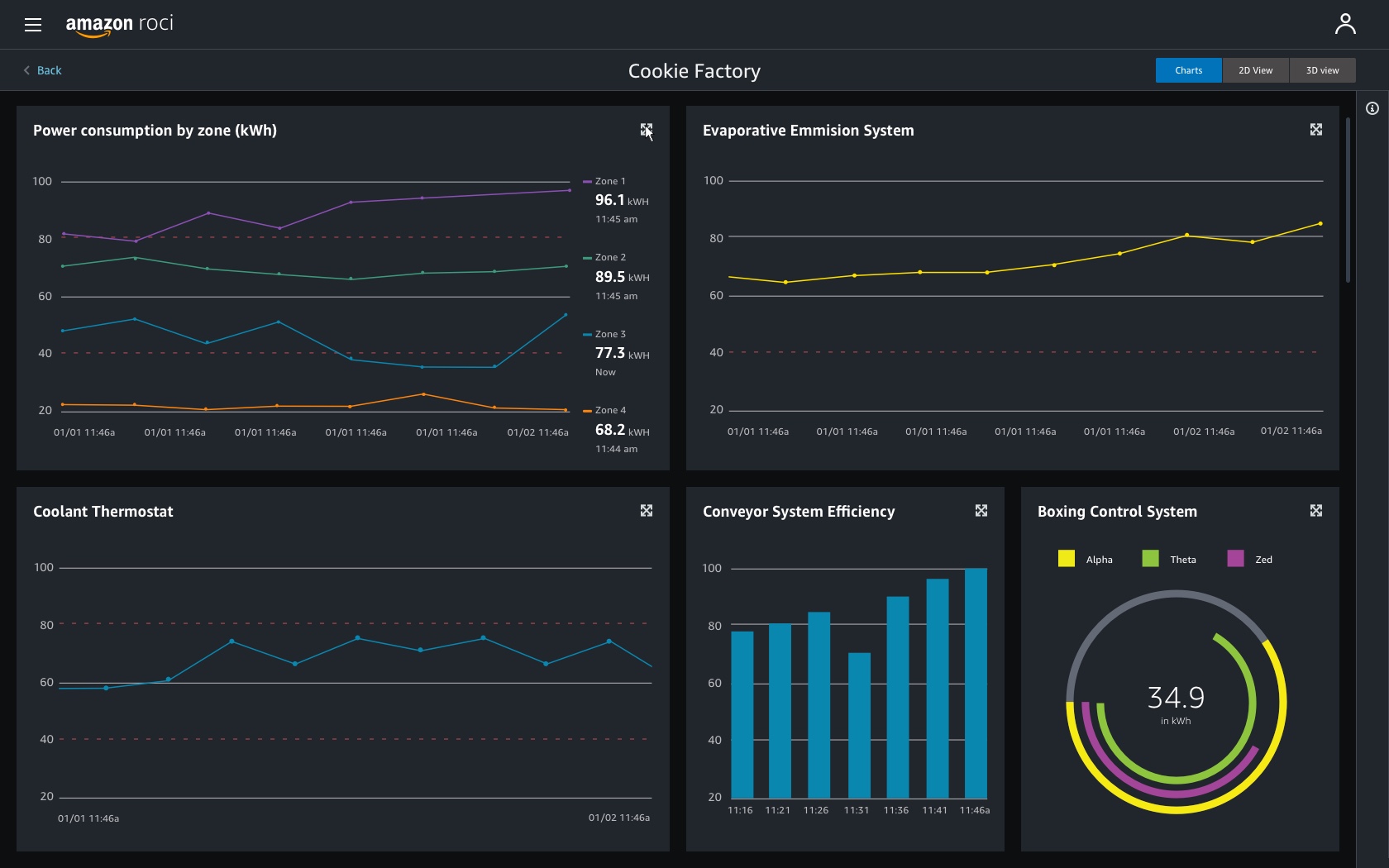
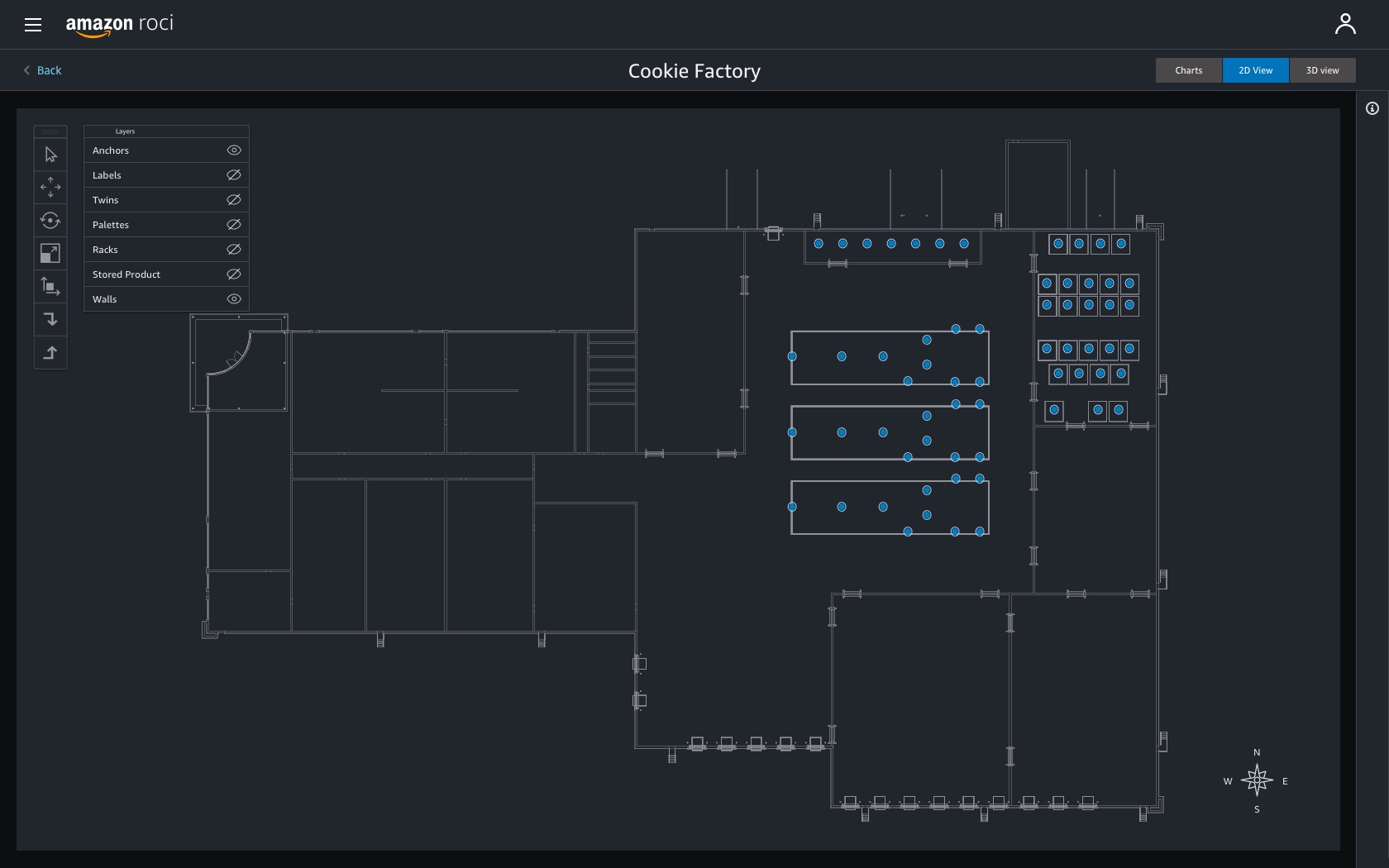
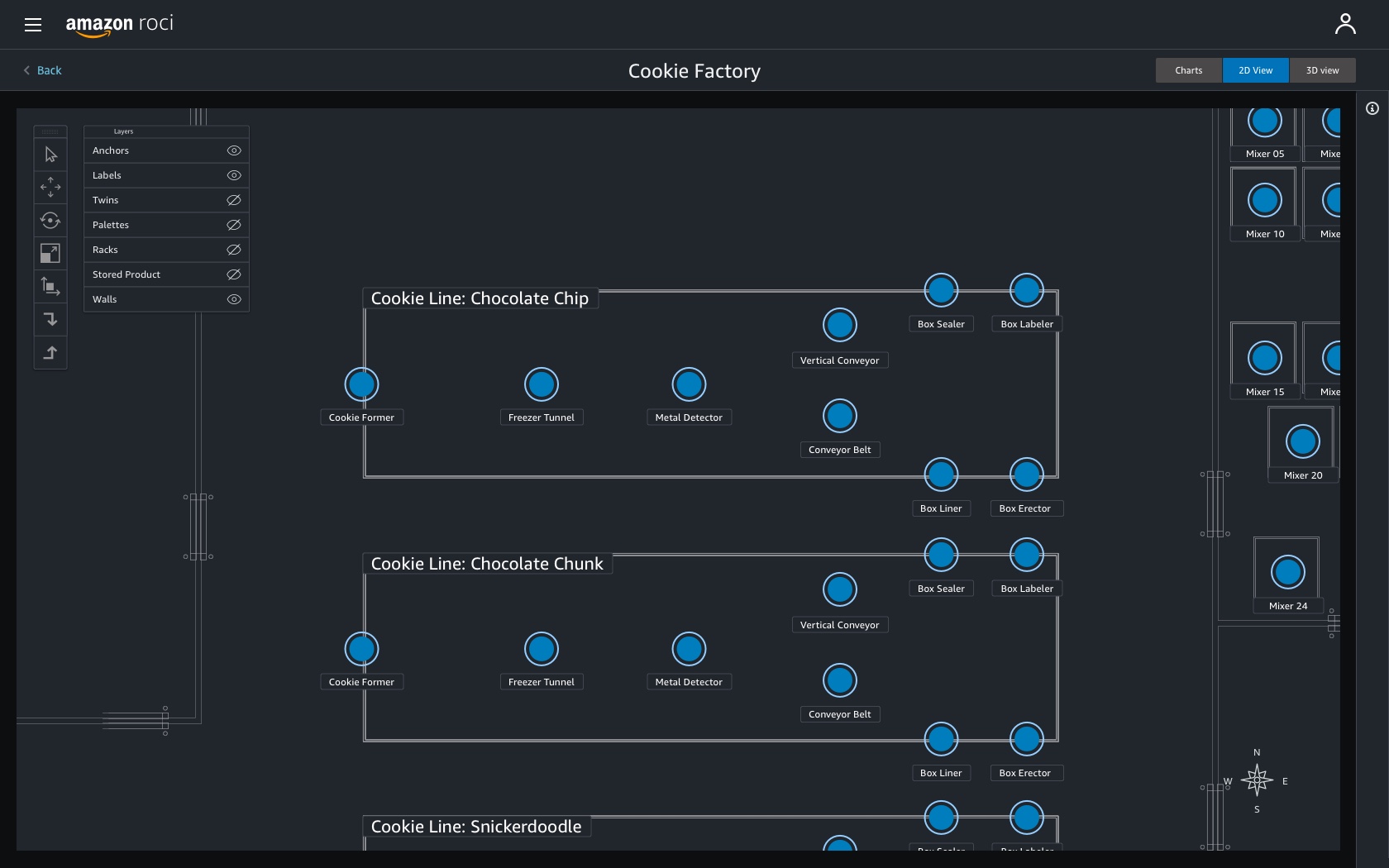
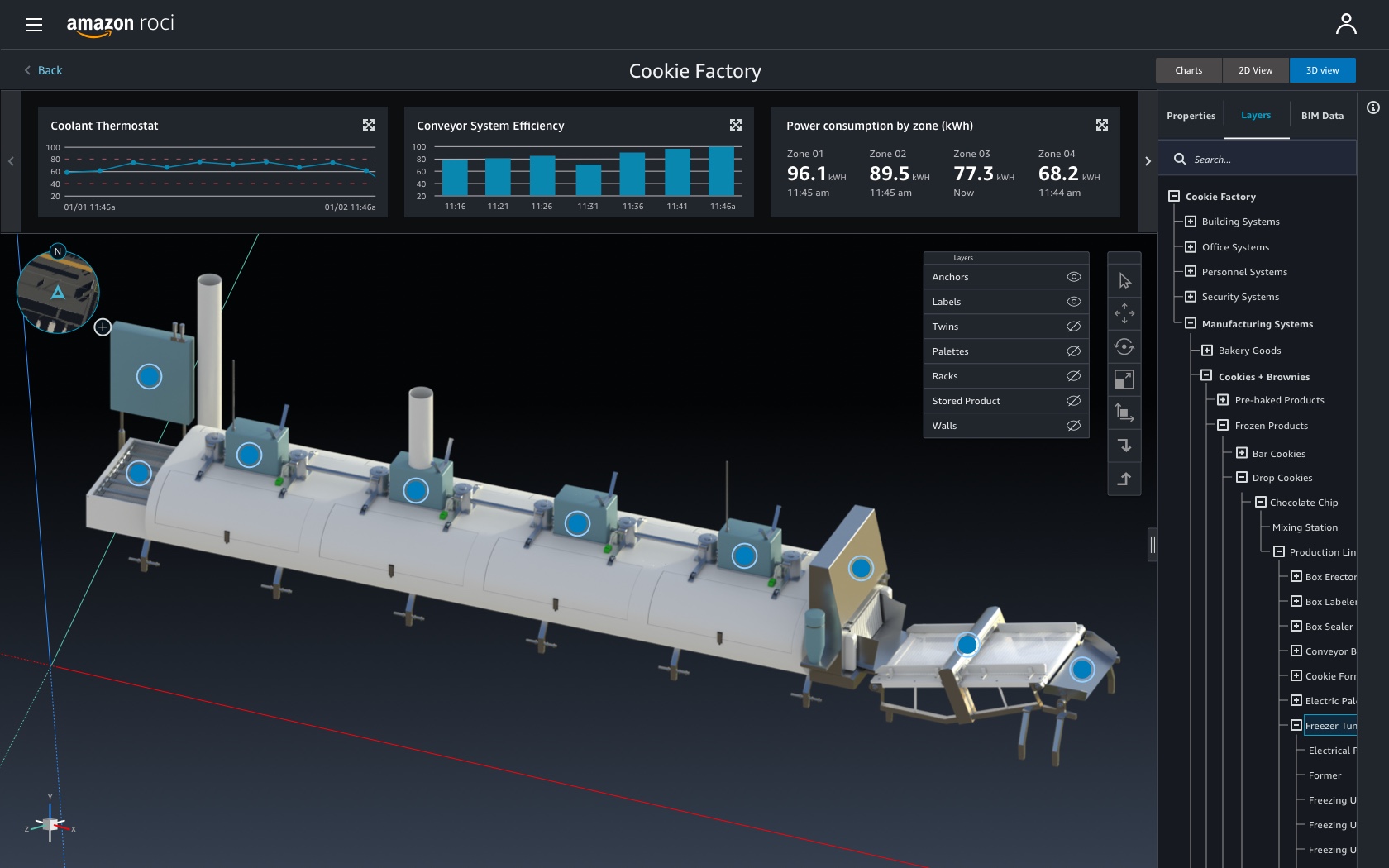
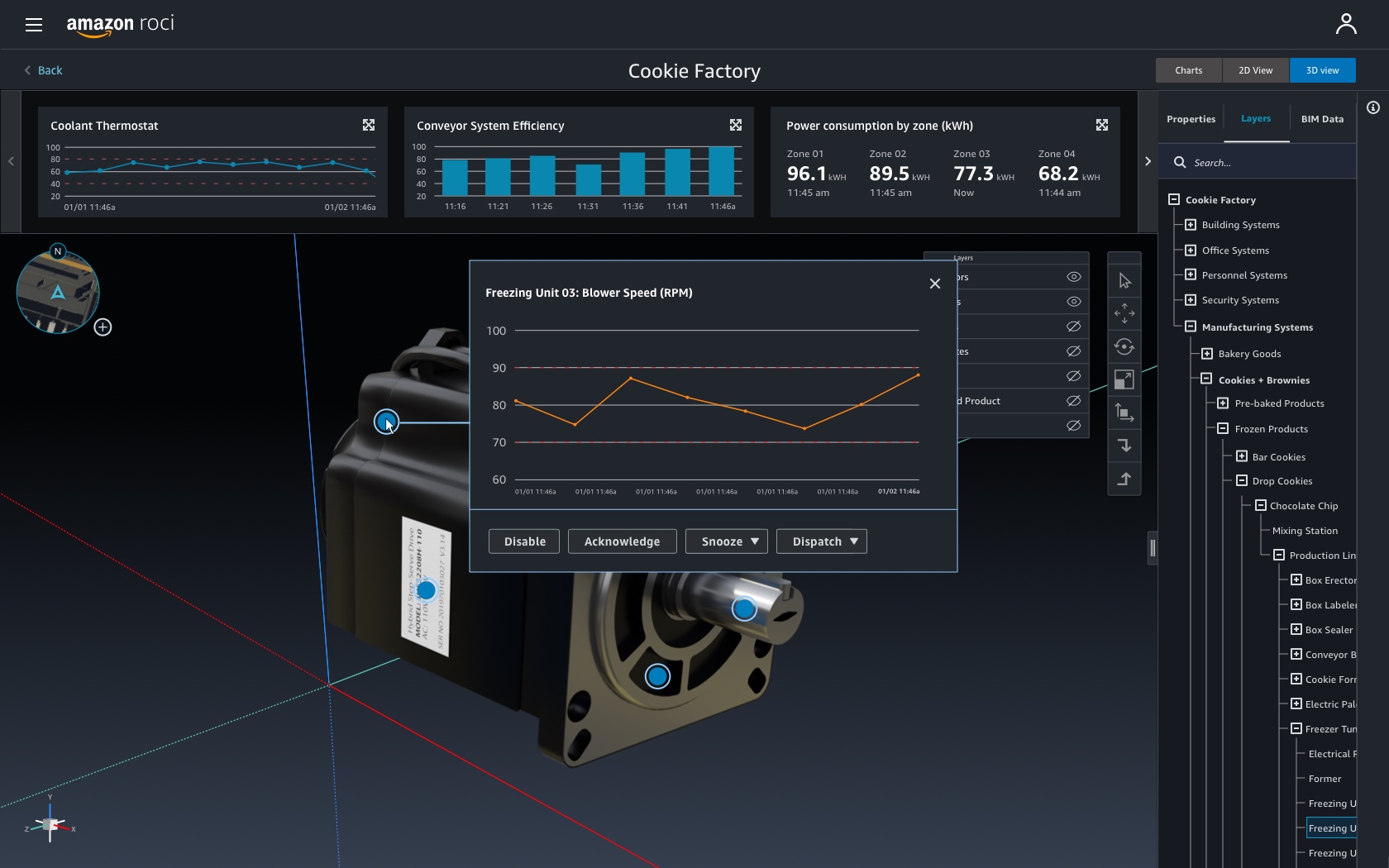
Cookie Factory
Industrial bakery. From dashboard charts to a single freezer motor in five views. Same pattern, different scale.
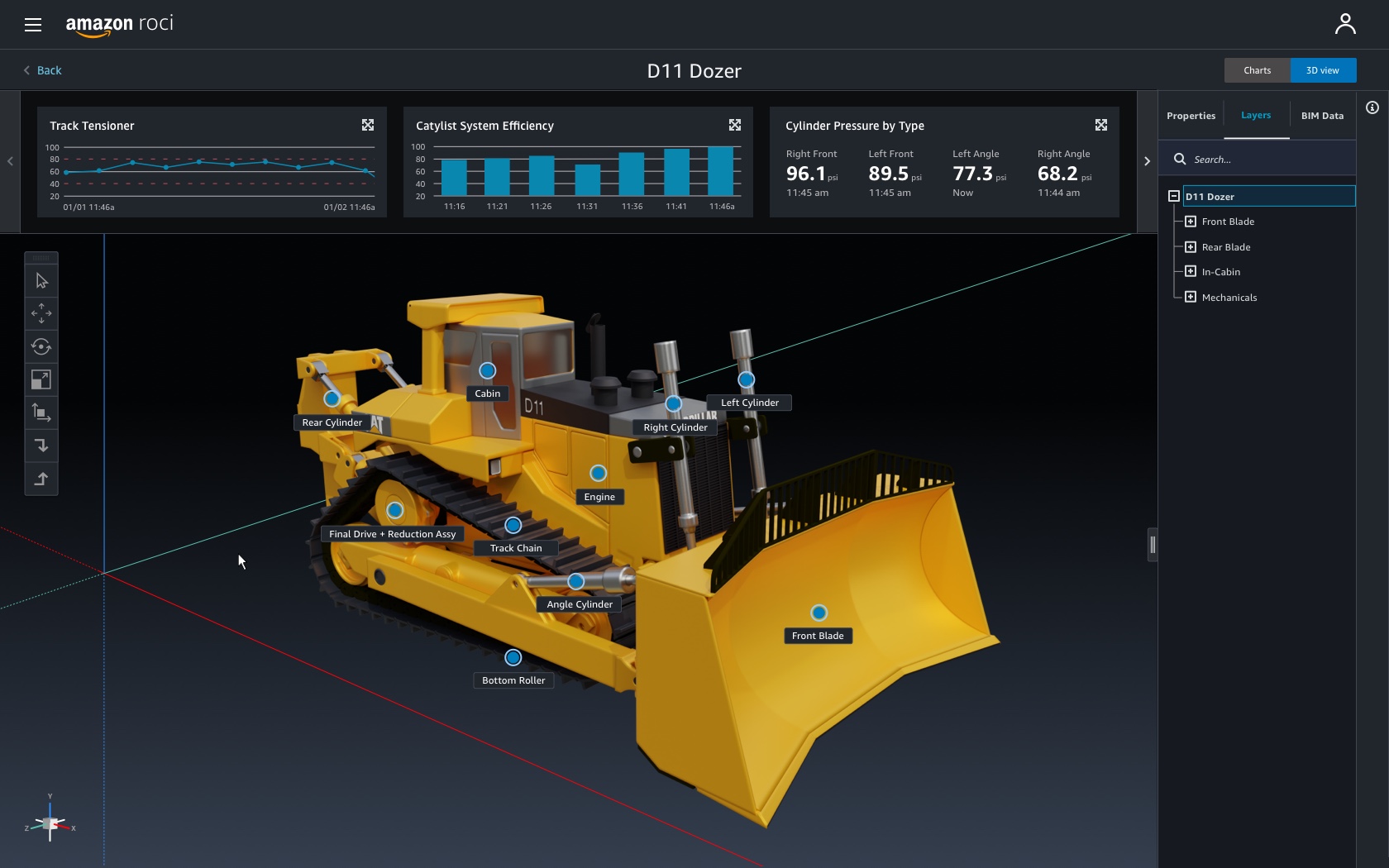
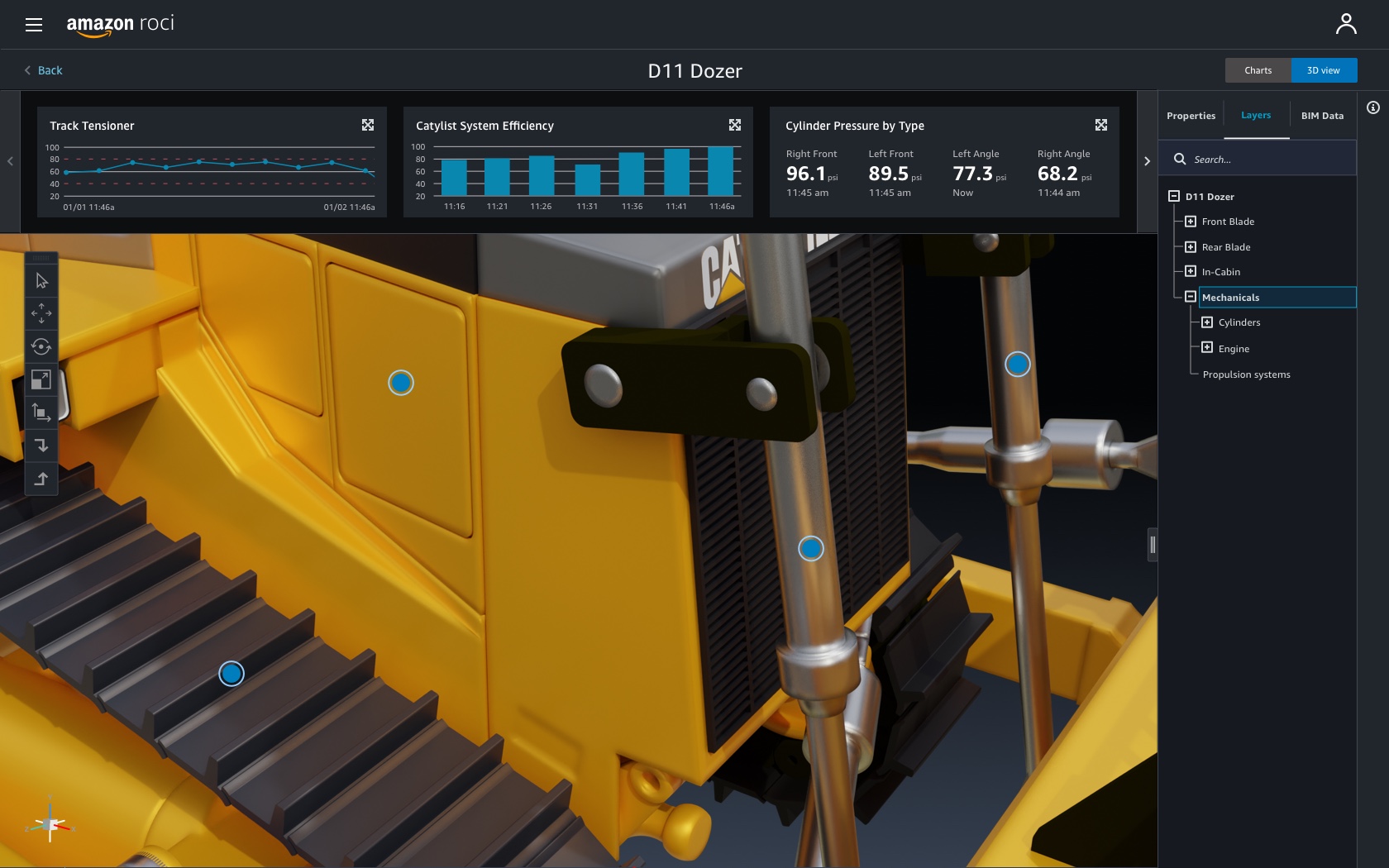
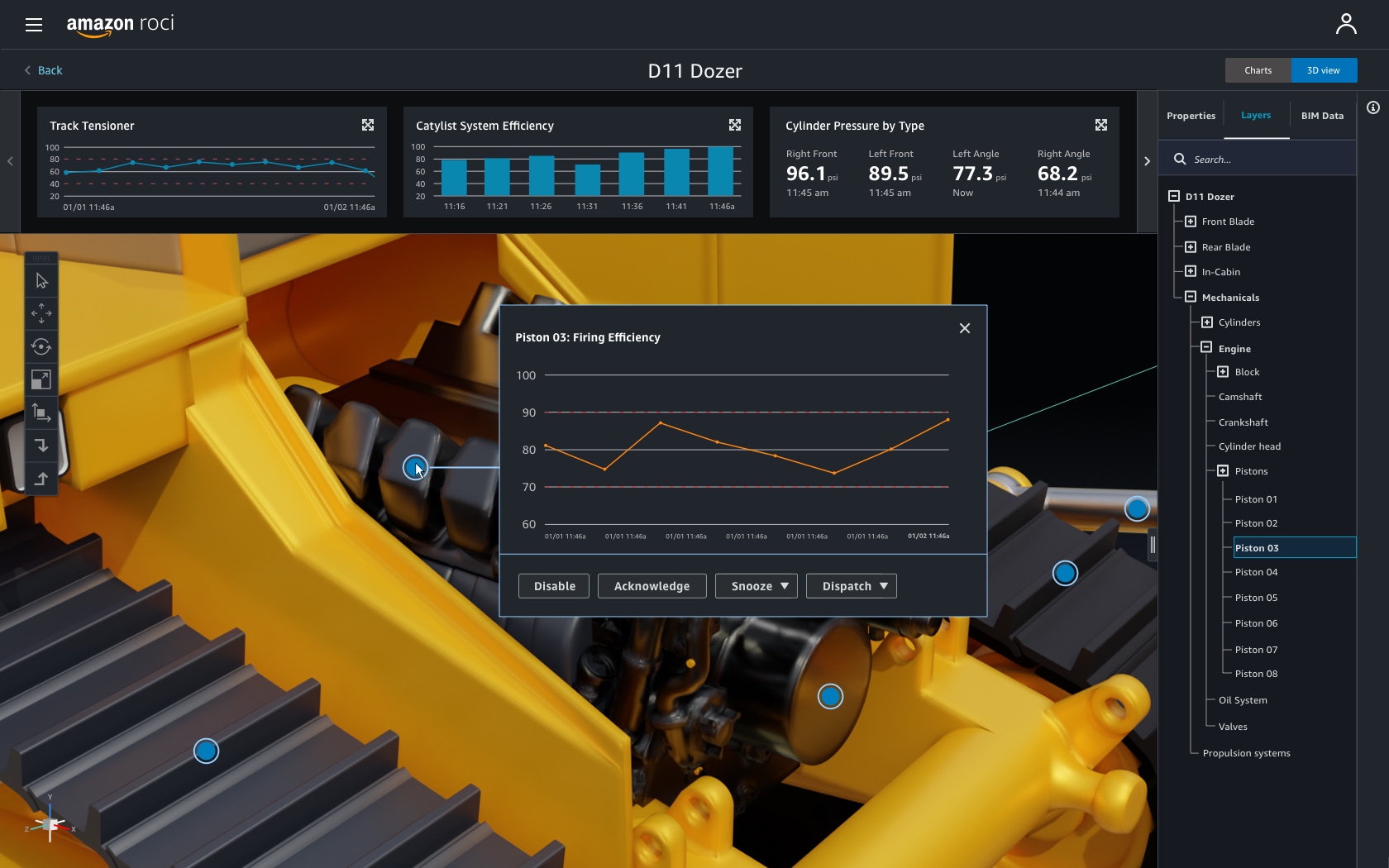
Dozer
Mining excavator. Same drill-down at heavy-equipment scale. Engine bay to faulty component.
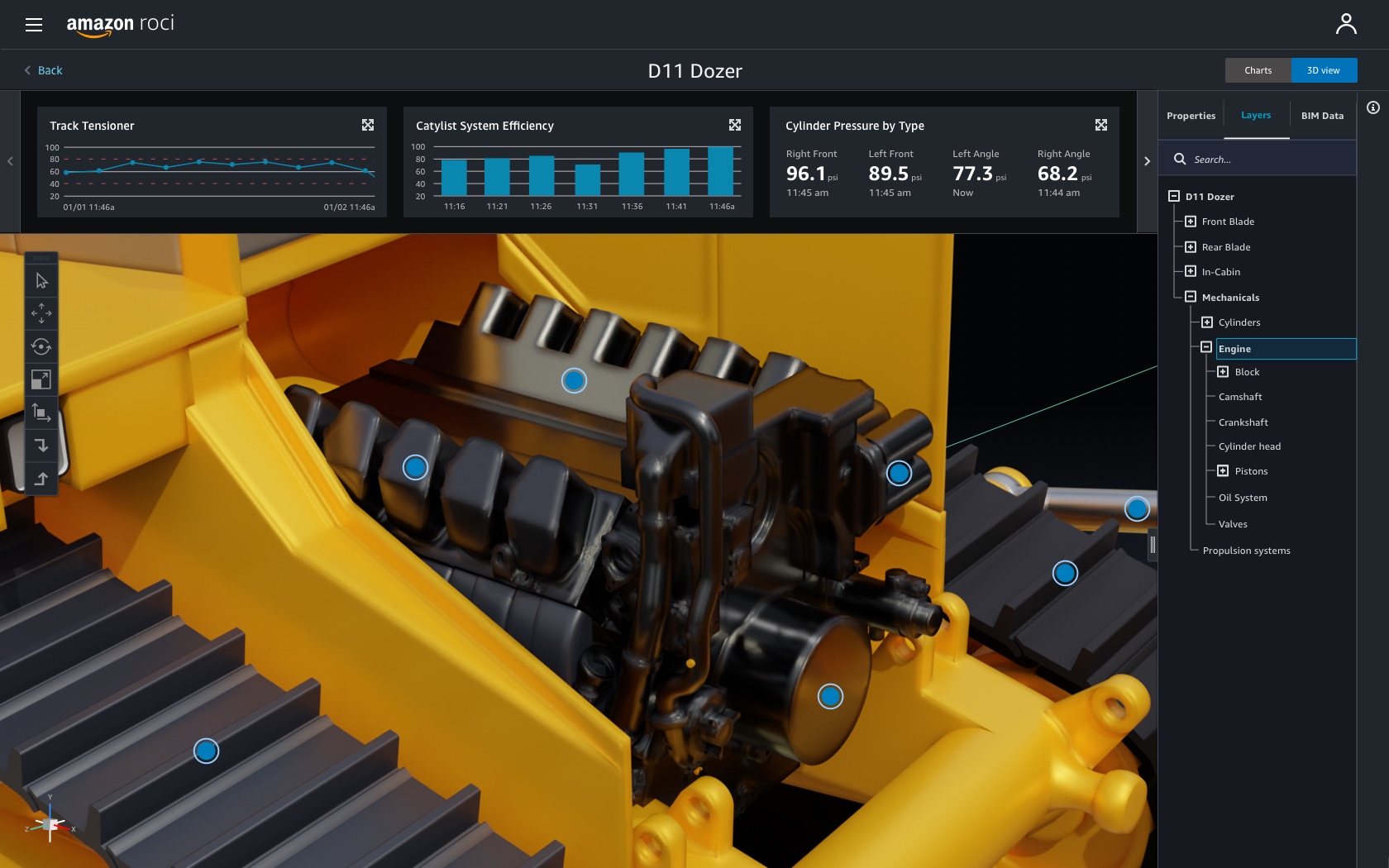
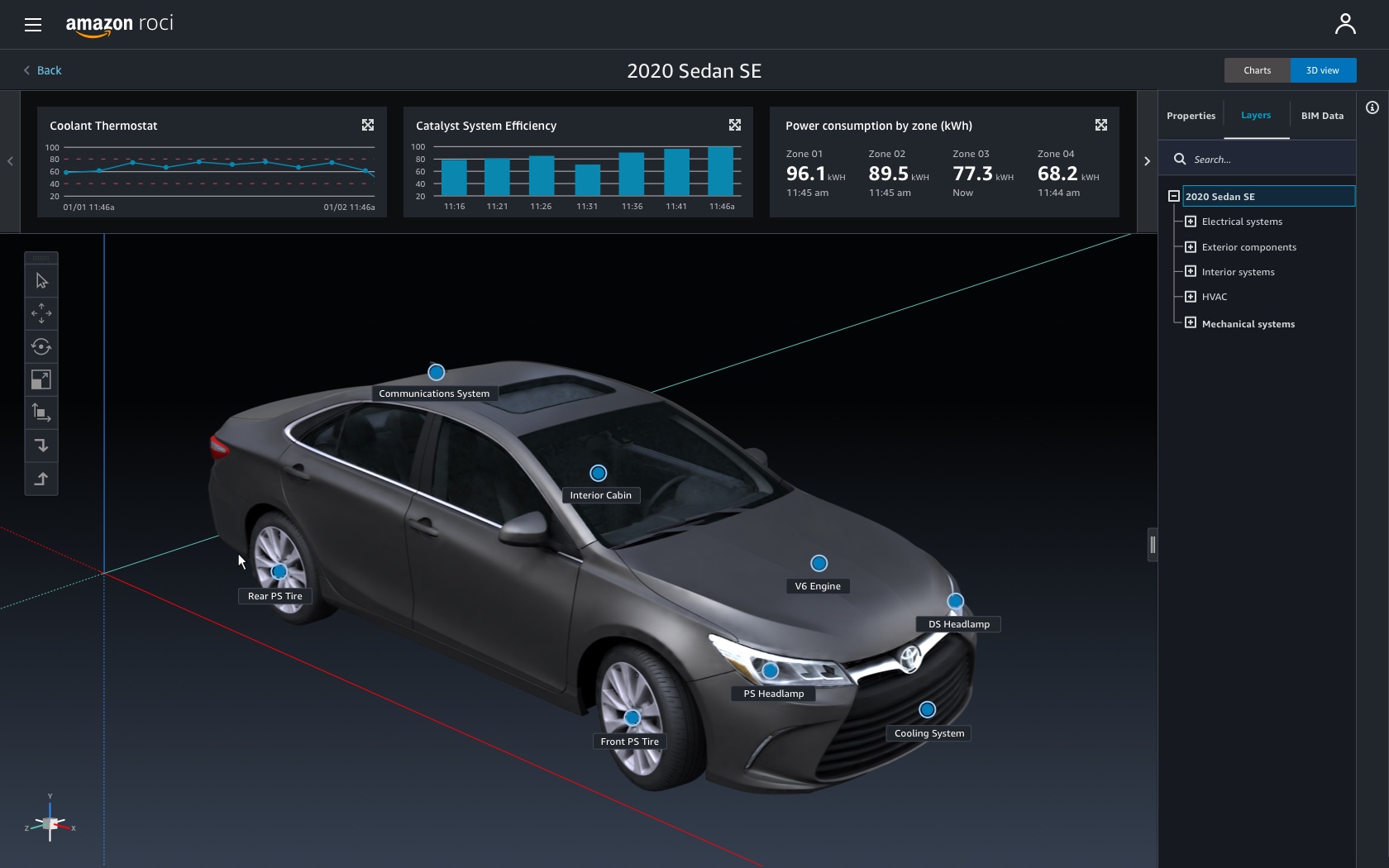
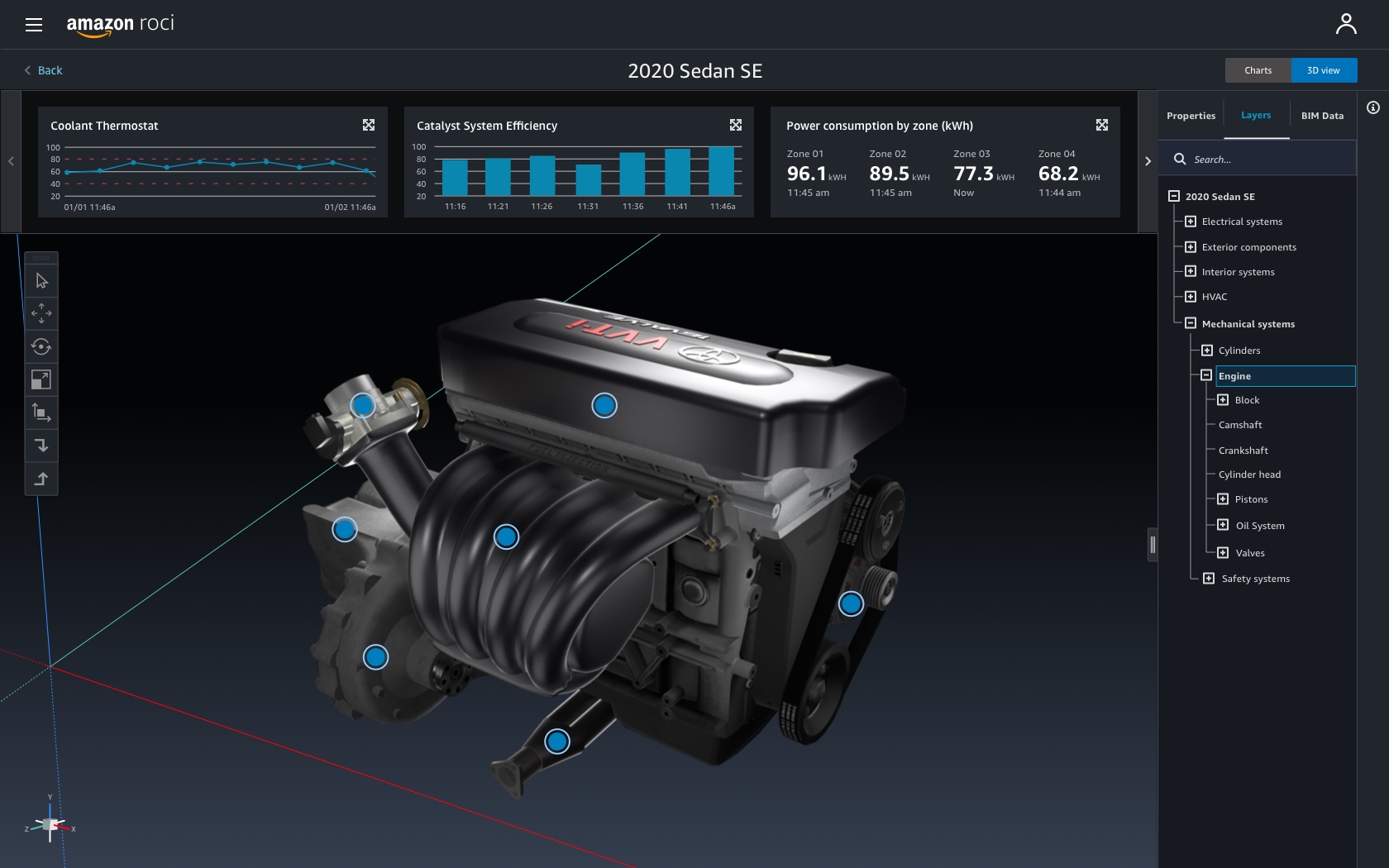
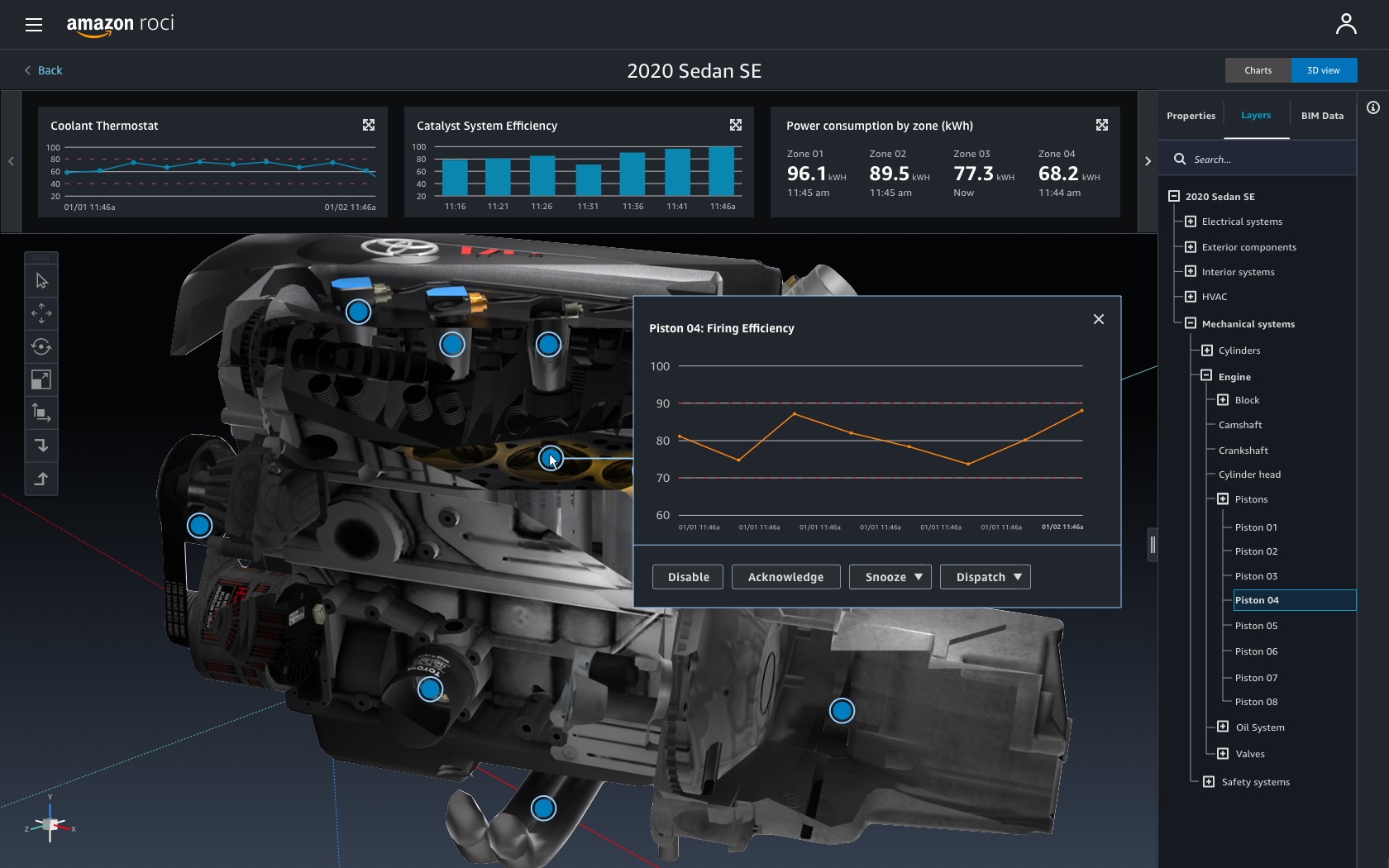
Auto
Automotive teardown. Engine assembly down to component-level diagnosis through the same spatial model.
Reflections
Industrial enterprise UX rewards systems thinking more than screen design. You aren’t designing one interface. You’re designing how three disconnected worlds share one canvas. TwinMaker shipped because we built the spatial interface as the integration layer for those worlds.
Credits
Role. Senior Product Designer, UX/UI. Sole designer on the concept and detailed design. Handed off to a partner team for final execution toward public launch.
Team. Worked with AWS IoT engineering, product and solutions leadership.
Public. Announced at AWS re:Invent 2021. Covered by TechCrunch.